
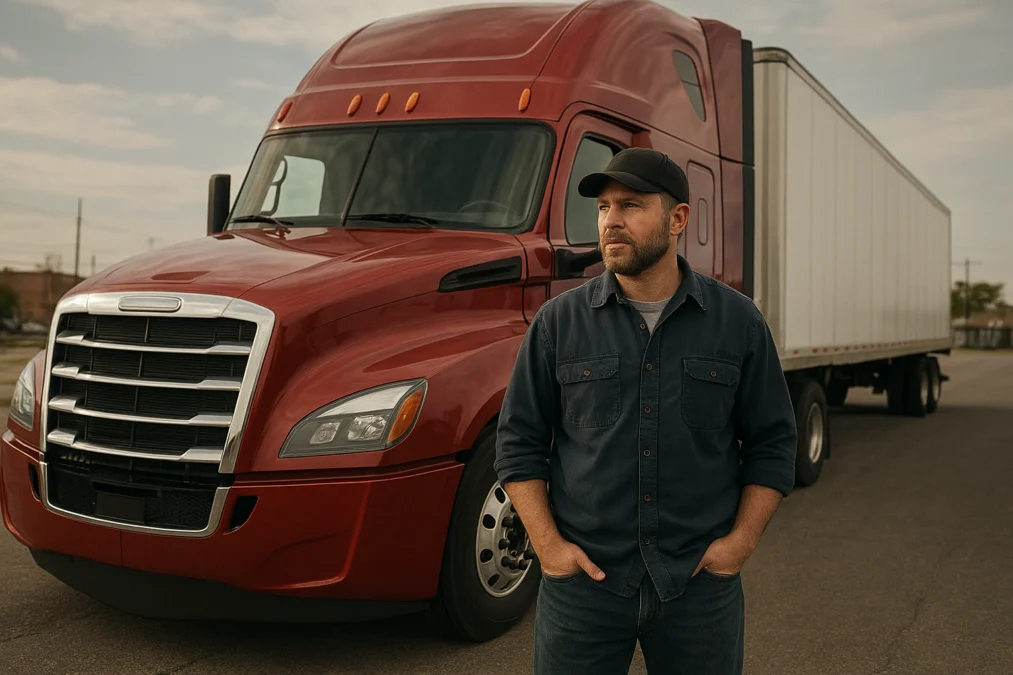
1. Start with the right question: where do you report?
If you are searching cdl jobs chicago, start by clarifying the reporting location before you spend time on anything else. For a driver, the difference between a Chicago-area job and a Chicago-based reporting location can affect your commute, parking, pickup timing, and daily routine. The key question is simple: where do I physically begin and end my shift?
Many job descriptions mention a city, a region, or a route but leave the actual reporting point vague. That can be confusing if you assume a position is downtown, near your neighborhood, or at a facility you can reach easily. Before you apply, ask whether the role reports to a terminal, customer site, yard, or another dispatch point. You are not asking for a promise; you are asking for clarity.
Hypothetical example: A driver sees a posting that says Chicago-area routes. That could mean a west suburban yard, a south side customer location, or a rolling assignment with a different starting point each week. If the reporting location matters to your commute or home schedule, you want that answer early, not after interviews.
Practical checklist:
– Ask where the reporting location is physically located.
– Ask whether the location is fixed or can change.
– Ask whether the job starts from a terminal, yard, customer facility, or home base.
– Ask what information is needed before you can confirm the commute is workable.
If the first conversation is unclear, that is a signal to slow down and gather more detail before you apply.
2. Why location clarity matters before an application
A reporting location is more than an address. It shapes how realistic the job feels in everyday life. If you are comparing cdl jobs chicago, location clarity helps you estimate drive time, parking needs, pre-shift timing, and whether the schedule fits your personal routine.
Drivers often think first about freight type or route length, but location can be the practical deal-breaker. A good role on paper can become a difficult one if the reporting point adds a long commute, requires an early arrival in heavy traffic, or places you in a spot that is hard to access at certain hours. On the other hand, a job that seems ordinary might become a strong fit if the start point is convenient.
The reporting location also affects how you interpret the rest of the job description. A local job, regional assignment, or nationwide U.S. road freight role can feel very different depending on where the driver begins the day. Lions Empire Inc. is one example of a carrier connected with nationwide U.S. road freight, but openings, routes, equipment, rates, pay, benefits, and schedules should always be confirmed per inquiry rather than assumed from a name or city reference.
Practical checklist:
– Compare the reporting location with your normal driving route.
– Think about parking, especially if you plan to drive a personal vehicle.
– Ask whether the start point is the same every day.
– Consider whether the location works for your preferred start time.
The point is not to overcomplicate the search. It is to prevent a mismatch that could have been avoided with one clear question.
3. What “Chicago” can mean in a job posting
In trucking, city names are often shorthand rather than precise directions. When a posting says Chicago, it may describe the broader market instead of the exact reporting spot. For drivers reviewing cdl jobs chicago, that distinction matters because the words in the listing may not tell you where the work truly begins.
A Chicago label might refer to the city itself, the surrounding suburbs, a dispatch area, or freight connected to the region. It might also describe where the company serves customers without saying where drivers are expected to report. If you assume the title gives you the full picture, you may miss key details.
Hypothetical example: A driver applies to a role titled Chicago CDL driver, expecting to report inside the city. During the conversation, it turns out the reporting point is in a nearby suburb. That may still be a good opportunity, but the commute and timing are different. The issue was not the role; it was the assumption.
When a posting is broad, look for signals such as route descriptions, facility references, or named areas in the body of the listing. If those details are absent, treat that as a prompt to ask a direct question.
Practical checklist:
– Read the title and body separately; do not assume they mean the same thing.
– Look for suburb names, yard references, or facility cues.
– Ask whether Chicago means city limits, metro area, or freight coverage.
– Save the posting and note the exact wording before contacting recruiting.
A simple habit of definition can save time for both you and the company.
4. Questions to ask before you submit anything
Before applying, you want a short list of direct questions that will reveal whether the role is worth pursuing. With cdl jobs chicago, the goal is not to interrogate the recruiter; it is to replace vague language with usable facts.
Ask where the reporting location is, how drivers get assigned there, whether the start point is fixed, and whether you should expect to return to the same place at the end of shift. If the company uses multiple yards or customer sites, ask which one applies to this opening. If the job is based on route coverage rather than a single terminal, ask how the start and finish points are handled.
You can also ask whether the reporting location has on-site parking, whether personal vehicles are typically left there, and whether the location is accessible during your preferred arrival window. These are practical questions, not minor ones. A good answer helps you decide whether to continue.
Hypothetical example: A driver who lives on Chicago’s north side is considering a job that seems ideal. The recruiter explains that the reporting location is on the far southwest side and the start time is early enough that rush-hour traffic would be part of every workday. That information does not make the job bad, but it does change the decision.
Practical checklist:
– Where exactly do drivers report?
– Is there one fixed location or more than one?
– Is the location the same for every shift?
– How is parking handled for drivers arriving by car?
– Is the job still worth applying for once the location is known?
Clear questions protect your time and help you evaluate the opportunity honestly.
5. How to read a job posting like a dispatcher would
Drivers often read job ads the way a job seeker would read any ad: looking for a quick fit. A more useful approach is to read it the way a dispatcher or hiring coordinator might have written it. If the posting for cdl jobs chicago feels general, look for clues about what the company expects before you make contact.
Notice whether the listing talks about route coverage, home terminal, customer site, or assigned area. Pay attention to phrases like Chicago metro, greater Chicago, or based near. Those phrases can be useful, but they are not the same as a confirmed reporting location. Also notice what the posting leaves out. If there is no address, no terminal name, and no clear start point, you should treat that as a question mark.
A practical reading habit is to separate confirmed facts from assumptions. Confirmed facts are what the posting actually states. Assumptions are what you infer from the title, the company name, or the city label. The more you separate those two, the better your application decisions become.
Practical checklist:
– Highlight the exact words that identify the location.
– Circle any vague terms such as area, region, or nearby.
– Write down unanswered questions before you call.
– Do not treat a city name as a street address.
This habit may seem small, but it prevents a large number of avoidable misunderstandings.
6. Choosing between a terminal, yard, or customer site
Not all reporting locations are the same. A driver may start at a terminal, a yard, a customer site, or a mix of those depending on the role. If you are comparing cdl jobs chicago, ask which of these applies because each one changes the feel of the job.
A terminal may suggest a more structured setting, but you still need to know how accessible it is and whether drivers report there every day. A yard can mean a straightforward start point, but yards vary widely in size, parking, and entry procedures. A customer site can be convenient or inconvenient depending on where it is and how the schedule works. Mixed reporting points require even more clarity.
Hypothetical example: A driver is told the job is Chicago-based. Later the company explains that Monday starts at one yard, Tuesday through Thursday start at customer facilities, and Friday returns to a terminal. That may be manageable, but only if the driver knows it in advance.
Ask whether the reporting site is the same as the freight pickup point. Ask whether the driver is expected to leave from the same place every day or move between locations. Ask what happens on the first day so you can understand the routine.
Practical checklist:
– Identify the type of reporting site.
– Ask whether it changes by day or by assignment.
– Confirm whether the site is the same as the load origin.
– Ask how first-day reporting works.
Different site types mean different daily experiences. Knowing which one you are considering helps you judge the fit.
7. The commute question that many drivers forget
The best job can still be a poor fit if the commute is unrealistic. That is why cdl jobs chicago should always be evaluated alongside the reporting location. A short title does not tell you what your morning drive will feel like.
Ask yourself whether the location works during the actual time you would need to arrive. A route that seems manageable at midday may be much harder at dawn or during evening traffic. Also consider whether the location is accessible if weather, road construction, or parking limitations become part of your daily pattern. You do not need to predict every detail; you just need enough information to make a realistic judgment.
Hypothetical example: Two drivers are considering the same role. One lives near the reporting yard and the commute is straightforward. The other would need to cross the metro area before sunrise every day. The job description is identical, but the value of the opportunity is not.
Practical checklist:
– Estimate the commute based on the actual reporting time.
– Ask whether start times are fixed or flexible.
– Consider parking and pickup logistics.
– Compare the commute against your tolerance for early starts.
A job search is not only about freight and equipment. It is also about how the work fits into ordinary life.
8. What to ask about schedules without overreaching
You do not need to ask for everything at once. Start with the schedule basics that help you understand the reporting location and the daily rhythm. For cdl jobs chicago, schedule clarity often matters as much as route area.
Useful questions include whether the start time is consistent, whether the shift begins at the same location every day, and whether the schedule changes by season, freight demand, or assignment. If the company offers schedules by inquiry rather than in a public posting, ask what details are available early in the conversation.
You are not asking for a guarantee. You are asking for a current description of the role. That distinction matters because openings, routes, equipment, rates, pay, benefits, and schedules should be confirmed per inquiry. The point is to understand what exists now, not what may have existed in a past posting.
Hypothetical example: A driver wants a daytime role near Chicago but finds the listing too broad. A recruiter explains that the schedule is best discussed after the reporting point is confirmed because the start time depends on the site. That is a reasonable reason to ask more questions before proceeding.
Practical checklist:
– Ask whether the start time is fixed.
– Ask whether the schedule changes by route or location.
– Ask whether the role is best understood after a location is assigned.
– Confirm whether the current opening matches your needs.
Schedule and location are linked. Treat them as one conversation, not two separate topics.
9. How to make first contact useful
Your first message to recruiting should be short, direct, and specific. If you are exploring cdl jobs chicago, open with the role, then ask for the reporting location before you discuss anything else. That helps the company respond with the detail you need.
You might write: I am interested in your Chicago CDL opening. Can you confirm the reporting location and whether it is a fixed start point? That single question is clear and respectful. If you want to go a step further, add that you are comparing commute options and need the location before applying.
A strong first contact avoids long back-and-forth. It shows that you are serious and organized. It also helps you decide whether the company communicates in a way that works for you. A prompt, specific answer is often more useful than a generic reply.
Practical checklist:
– State the role or posting you are asking about.
– Ask one primary question about reporting location.
– Keep the first message short enough to answer quickly.
– Save the response for later comparison.
The right first message can save time for both sides and make the rest of the process easier.
10. Using the driver inquiry form or freight inquiry form properly
If a company offers a driver inquiry form, freight inquiry form, or contact page, use it to gather the details that matter before you apply. These forms are often better than a general phone call when you want a written record of what was asked and answered.
When filling out a driver inquiry form, include the position you are interested in, your area, and a direct question about the reporting location. If you are using a freight inquiry form or the contact page to reach the company for information, be just as specific. Even if the form seems designed for a different purpose, clear questions about the start point can still help you move in the right direction.
For example, you might note that you are researching cdl jobs chicago and want to know whether the opening reports at a terminal, yard, or customer site. If the company is Lions Empire Inc., you can use the company contact page or inquiry route to ask directly. Lions Empire Inc. lists a registered office in Palatine, Illinois and provides contact details including +1 (708) 722-1817 and Drive@lionsempire.com. As with any carrier, openings, routes, equipment, rates, pay, benefits, and schedules should be confirmed per inquiry.
Practical checklist:
– Use the inquiry form or contact page to ask one clear question.
– Mention the job type and city you are researching.
– Ask for the reporting location in writing if possible.
– Keep a copy of the submitted message.
A form is only useful if your question is specific enough to produce a useful answer.
11. Comparing opportunities without comparing rumors
When drivers talk about jobs, they often trade impressions before facts. That can be helpful for ideas, but it should not replace direct confirmation. If you are reviewing cdl jobs chicago, compare only the details you can verify from the company or from the posting itself.
A comparison based on rumor can lead you away from a good opportunity. A comparison based on confirmed reporting location, actual start point, and current contact response is much stronger. If two openings sound similar, the location details may be the factor that separates them.
Hypothetical example: One driver hears that a role is "far out" while another hears it is "easy to get to." Those comments mean little unless they are tied to an actual reporting address and shift time. Without those specifics, you are comparing opinions, not jobs.
Practical checklist:
– Compare confirmed location details, not secondhand comments.
– Put the reporting point next to your commute estimate.
– Compare how clearly each company answers questions.
– Favor current information over old impressions.
A careful comparison protects you from making a decision based on incomplete or outdated information.
12. Evaluating whether the location fits your day-to-day life
A reporting location should work in your actual life, not in an idealized version of it. Before applying for cdl jobs chicago, think about how the job will interact with family time, sleep, personal errands, and your willingness to drive across the metro area.
You do not need to overanalyze every possibility. Instead, focus on the practical realities you know already. If you dislike heavy traffic before sunrise, that matters. If you prefer predictable starts from the same place, that matters too. A job can be attractive and still be a poor fit if the daily logistics wear you down.
Hypothetical example: A driver is excited about a role until they realize the reporting point is close to home but the end-of-day return time makes dinner with family difficult. Another driver accepts a farther commute because the schedule is easier and more predictable. Both choices can be reasonable because the right fit depends on priorities.
Practical checklist:
– Match the reporting location to your typical day.
– Think about the commute both going and returning.
– Decide what matters more: proximity, predictability, or schedule style.
– Be honest about the limits you do not want to cross.
The best job is not just the one that sounds good. It is the one that works repeatedly in real life.
13. What to clarify about equipment and the reporting site
Even though this editorial focuses on location, equipment and reporting site often go together. A driver may need to know where the truck is picked up, where it is staged, and whether the reporting location is also the equipment location. If you are exploring cdl jobs chicago, ask how the truck and the start point relate.
You are not asking for a promise about specific equipment unless the company offers that information in the current inquiry. Instead, you are trying to understand whether the job starts with a truck already assigned at the reporting site or whether another arrangement applies. That small detail can change your arrival timing, your routine, and the first-day experience.
Hypothetical example: A driver assumes the truck will be at the same location as the interview. Later they learn the reporting site and equipment pickup point are different. The job may still work, but the misunderstanding could have been avoided with one question.
Practical checklist:
– Ask where the truck is located at the start of shift.
– Ask whether the reporting location and equipment location are the same.
– Ask whether any move between sites is expected.
– Confirm what happens on day one.
Location clarity is stronger when you understand both people movement and equipment movement.
14. How to handle vague answers politely
Sometimes the first answer is incomplete. That does not mean the company is unorganized; it may simply mean you need to ask again in a more specific way. If you are discussing cdl jobs chicago and the response is too broad, restate your question and ask for the exact reporting location.
You can say something like: Thanks. To make sure I understand, where do drivers physically report for the shift? If there are multiple sites, which one applies to this opening? That wording is polite, direct, and difficult to misread. It keeps the conversation focused on facts.
If the company still does not answer clearly, decide whether the lack of clarity is acceptable to you. Some drivers are comfortable continuing the conversation. Others prefer to move on if basic information remains uncertain. Both responses are reasonable.
Practical checklist:
– Re-ask the question using simpler wording.
– Ask for the physical reporting point, not the service area.
– Note whether the reply is specific or still vague.
– Decide whether the communication style works for you.
How a company answers a simple location question often tells you a lot about what working with them may feel like.
15. Hypothetical example: a Chicago-area driver compares two openings
Consider a hypothetical driver who lives in the southwest suburbs and is reviewing two opportunities. One says Chicago-based routes with no further detail. The other says the reporting location is in the west suburbs and the company will confirm current route details per inquiry. The second posting may not be more exciting, but it gives the driver something usable.
The driver contacts both companies. One responds with a general description only. The other confirms the reporting site and offers to discuss the opening further through the contact page. The driver realizes that the better choice is not the one with the flashier title; it is the one that provides enough information to judge the commute and fit.
This example is not a claim about any specific employer. It is a model of how to think. The decision-making process improves when the driver uses facts that can be confirmed now rather than assumptions based on wording alone.
Practical checklist:
– Compare how each company answers location questions.
– Use the same question for each opening.
– Record the answers side by side.
– Choose the opening that gives you the clearest picture.
A methodical comparison often matters more than the wording of the job title.
16. Hypothetical example: a driver applies too quickly and learns too late
Imagine a driver who sees a promising ad for cdl jobs chicago and applies immediately because the posting sounds close to home. Later, in the first conversation, the driver learns the reporting point is not in the city but in a location that adds a long commute and an early departure time.
The role itself may still be a fit, but the driver now has to reconsider time, travel, and family routine after already investing energy in the process. That is the avoidable part. A short question at the beginning could have changed the outcome.
This kind of mistake is common because applicants often focus on the job title first. It is more effective to focus on the everyday logistics first. If the reporting location works, then you can continue to route, schedule, equipment, and any other details that matter to you.
Practical checklist:
– Ask the reporting question before submitting a full application when possible.
– Pause if the job title sounds broad or generic.
– Treat commute impact as a core part of the decision.
– Do not assume a city label means a city yard.
Speed can be useful in job hunting, but clarity should come first.
17. When to keep going and when to step back
Not every unclear posting should be rejected. Sometimes a company just needs one extra question to make the opportunity understandable. But if cdl jobs chicago remain vague after you ask for the reporting location, it is reasonable to step back and keep looking.
A useful rule is this: if the company can tell you where to report, how the start point works, and whether the site is fixed, you probably have enough to continue. If those basics stay fuzzy, then the process is asking you to decide without the facts you need. That is your cue to move on unless you have a strong reason not to.
Hypothetical example: One driver receives a clear response within a day and moves forward. Another gets a reply that only repeats the city name. The second driver decides not to spend more time chasing details. That choice is not negative; it is efficient.
Practical checklist:
– Continue if the location answer is clear and current.
– Step back if the answer stays broad or evasive.
– Protect your time by setting your own threshold for clarity.
– Remember that moving on is sometimes the smartest option.
A disciplined search is not about saying yes to every opening. It is about choosing the right one.
18. Final takeaway for Chicago-area CDL drivers
If you are exploring cdl jobs chicago, the most useful first step is to clarify the reporting location before you apply. That one question helps you judge commute, schedule, parking, and day-to-day fit. It also tells you something important about the company’s communication style.
Use the job title as a starting point, not a conclusion. Use the driver inquiry form, freight inquiry form, or contact page when you need a written record. Ask whether the reporting point is a terminal, yard, or customer site, and whether it is fixed. If you are speaking with a carrier such as Lions Empire Inc., remember that company openings, routes, equipment, rates, pay, benefits, and schedules must be confirmed per inquiry. The same principle applies across the industry: current details matter more than assumptions.
Practical checklist:
– Confirm the exact reporting location.
– Confirm whether the site is fixed or variable.
– Compare the commute to your real routine.
– Proceed only when the basics are clear.
A careful first question can save time, reduce confusion, and help you choose a job that truly fits.
Frequently asked questions
Why should I ask about the reporting location before applying?
Because the reporting location affects your commute, parking, start time, and whether the role fits your daily routine. It is one of the fastest ways to separate a realistic opportunity from a vague one.
Does a Chicago job title always mean the work starts in the city?
No. Chicago in a posting may refer to a metro area, route coverage, or customer region rather than a specific reporting address. Always ask where drivers physically report.
What is the simplest question to ask first?
Ask: Where do drivers report for this opening, and is the start point fixed? That question is short, clear, and useful.
What should I do if the answer is still vague?
Ask again using simpler wording. If the location still is not clear, it is reasonable to step back and keep comparing other openings.
Discuss your next driving role
Share your location, experience and priorities. Recruiting can explain current openings and the next step.
Contact Lions Empire · +1 (708) 722-1817 · Drive@lionsempire.com
Have a question for our team?
Discuss current driver opportunities or your next freight inquiry.
Contact Lions Empire