
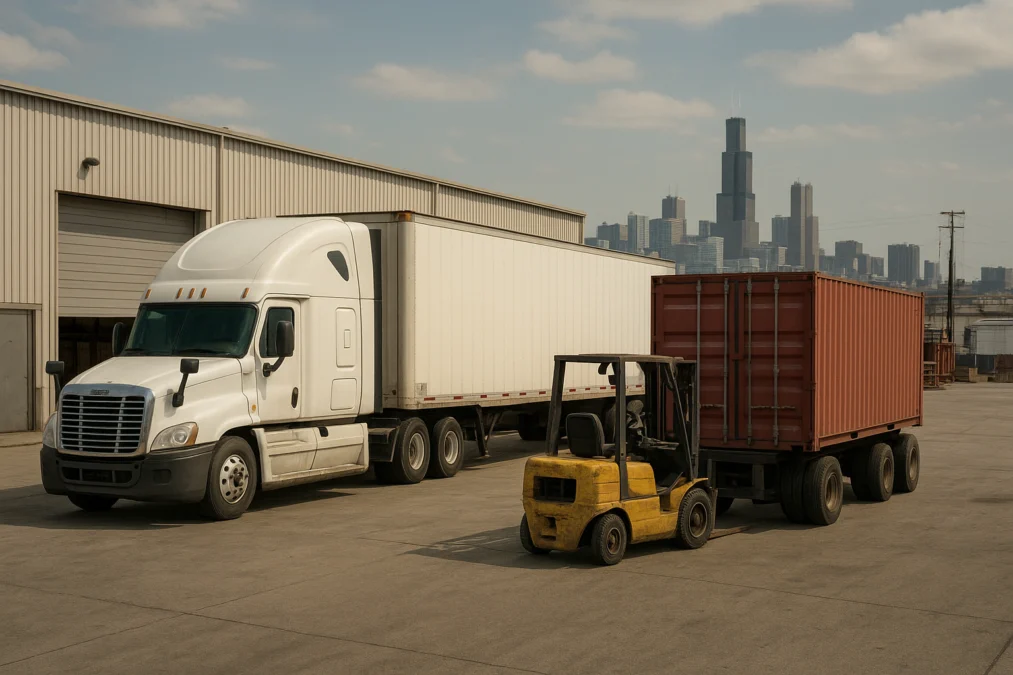
1. Start with the reason for the inquiry
When business shippers contact trucking companies in chicago area, the first goal is not to ask for a price or a promise. The first goal is to make the load understandable. A road freight inquiry should show what is moving, where it starts, where it ends, when it is ready, and what makes it unusual. If those basics are unclear, the response will usually be incomplete or require several follow-up messages.
A useful inquiry reads like a working brief, not a sales pitch. The carrier should be able to scan it and decide whether the load can be reviewed, whether the timing fits, and what other details are needed. That is true whether you are sending an email, using a driver inquiry form, using a freight inquiry form, or calling the contact page number listed by the carrier. For example, Lions Empire Inc. lists nationwide U.S. road freight service, with a registered office in Palatine, Illinois, and contact details including phone +1 (708) 722-1817 and email Drive@lionsempire.com. Those facts can help you identify the right place to start, but the specific opening, route, equipment, rates, pay, benefits, and schedules still need confirmation per inquiry.
The sharper your first message, the less time you spend correcting assumptions later. A good inquiry is a coordination tool, not just a request for availability.
2. Define the shipment in plain business language
The most useful inquiries describe the shipment in words that a dispatcher, planner, or load coordinator can immediately understand. Start with the product type in general terms. Is it boxed goods, palletized merchandise, machinery, components, display materials, or empty packaging? Then explain whether the freight is fragile, stackable, temperature-sensitive, awkwardly shaped, or time-sensitive.
Avoid vague labels like “general freight” unless the load truly is ordinary and easy to classify. Even then, add context. “12 palletized retail fixtures, shrink-wrapped and floor-loaded at origin” gives a much clearer picture than a one-line message that only says “need truck.”
Hypothetical example: A manufacturer in Schaumburg needs to move assembled metal frames to a distribution site in Indianapolis. The inquiry should say that the freight is palletized, the pallets are non-stackable, the load is ready after 2 p.m., and the delivery window is next business day morning. That simple description already answers several planning questions before a carrier even asks them.
The more your terminology matches the real physical load, the easier it is for trucking companies in chicago area to decide whether they can continue the conversation.
3. State the pickup and delivery points precisely
One of the fastest ways to slow a freight inquiry is to identify locations too loosely. “Chicago to Ohio” may be accurate in a broad sense, but it is not enough for planning. A carrier needs the exact pickup city, the delivery city, and ideally the facility type for each stop. A warehouse, manufacturing plant, retail DC, office site, or construction yard can each create different access needs.
If there are multiple stops, list them in order. If the shipment crosses different facility hours, mention that too. For example, a pickup in Bolingbrook from a warehouse with morning-only dock appointments is very different from a same-day lift from a plant near O’Hare with afternoon loading only.
You should also identify whether the load is within the Chicago metro area, leaving the region, or coming into it from another state. That helps the carrier understand traffic patterns, appointment pressure, and route length without guessing. If your team is comparing carriers, the location details should appear in every version of the inquiry so each response is based on the same scope.
4. Add timing details that matter to planning
Timing is not just a date. It is readiness, appointment windows, and flexibility. A strong inquiry tells the carrier when freight is available, when it must leave, when it can deliver, and whether any of those times can move. If you know that the shipment is ready earlier than required, say so. If delivery can happen over a range of hours, say that too.
Some shipper teams only write the planned ship date and overlook the loading window. That can cause confusion if the facility needs a dock appointment or if the freight must be staged before the driver arrives. Likewise, if the delivery has a strict check-in time, the carrier should know before a load is discussed.
Hypothetical example: A food equipment distributor in Elk Grove Village needs a load delivered to St. Louis “sometime this week.” That phrase does not help the carrier. A better message is: “Ready Tuesday after 1 p.m.; delivery preferred Wednesday before noon; flexible through Thursday if needed.” That gives the carrier something workable.
If you use a driver inquiry form or freight inquiry form, timing fields should be complete even if the exact appointment has not yet been set. A clear best estimate is usually more useful than leaving the field blank.
5. Describe freight dimensions and handling in a way a planner can use
Dimensions are more than a technical detail. They determine how freight is staged, loaded, and matched to available equipment. Include the number of pallets, pieces, cartons, crates, skids, or loose items. Add approximate length, width, height, and total weight if known. If the load includes oversized items, awkward shapes, or anything that cannot be stacked, say that plainly.
Also explain the handling condition at origin and destination. Is it dock-to-dock, driver-assisted by facility staff, or a situation where the shipper must provide loading equipment? Do not assume a carrier will infer that from your industry. If you do not know the exact measurements, provide the best current estimate and note that it is an estimate.
Practical checklist for freight description:
Number of pieces or pallets
Approximate weight
Approximate dimensions
Stackable or non-stackable
Palletized, boxed, crated, or loose
Fragile or unusual handling notes
Loading and unloading method
A precise freight description reduces unnecessary back-and-forth and helps trucking companies in chicago area decide whether the load is a fit for their current equipment and schedule.
6. Explain access conditions at both facilities
A strong inquiry should help the carrier picture the site before a truck arrives. Mention dock height, ground-level loading, rear access, tight turning space, security check-in, limited parking, or any other feature that may affect the visit. If the site is in downtown Chicago, near a congested business district, or in an industrial park with restricted truck entry, that matters.
You do not need a long safety narrative. You just need the practical facts that affect entry and loading time. If a driver must call ahead, present ID, use a specific gate, or check in with a particular department, include that in the inquiry. If the shipper’s location has no overnight parking or no room for a tractor-trailer to wait, the carrier should know.
Hypothetical example: A company on the city’s southwest side has a dock that can accept only a single truck at a time and requires entry through a side street. That does not mean the load is difficult, but it should be stated clearly so the dispatcher can plan the arrival sequence and avoid a delay that could have been anticipated.
Access details are part of the load itself. They should be treated that way in every inquiry.
7. Clarify the equipment you think you need
If you are reaching out to trucking companies in chicago area, the equipment request should be specific enough to guide the discussion but not so rigid that it ignores alternatives. Say what you believe is needed: dry van, reefer, flatbed, box truck, straight truck, or another type if applicable and confirmed by the carrier. If you are unsure, describe the freight and ask what equipment is appropriate.
Do not write “anything available” unless flexibility is truly acceptable. A planner cannot confidently respond to a vague equipment request without more context. On the other hand, if the shipper team is open to several options, say that clearly. For example: “Preferred enclosed trailer, but open to other enclosed road-freight equipment if suitable for the load.”
Useful equipment inquiry checklist:
Preferred trailer or truck type
Why that equipment seems appropriate
Whether loading requires a dock or liftgate-type access
Whether protection from weather matters
Whether dimensions limit equipment choices
Remember that equipment openings and availability are confirmed per inquiry. Even a well-written request does not guarantee a specific setup. It only makes the response more accurate.
8. Identify special cargo characteristics without overcomplicating the message
Some loads have special characteristics that affect how they should be discussed, even if they do not require a long explanation. Examples include high value, delicate packaging, odd stacking rules, mixed pallets, or freight that must stay upright. Mention only the traits that matter to a dispatcher or planner.
If you add too many internal labels or company-specific terms, the inquiry may become harder to interpret. Use straightforward language instead. “Glass display panels packed in custom crates” is better than an internal product code no one outside your team understands.
Hypothetical example: A store fixture company is sending a mix of assembled shelving and boxed hardware to a project site. The freight is not unusual, but some pieces are longer than standard pallets and should not be stacked. That simple statement is enough to guide the initial carrier discussion.
The goal is not to document every item in the shipment. The goal is to communicate the freight traits that could change the route, load plan, or equipment discussion.
9. Be clear about whether the shipment is one-time or recurring
A carrier’s response can differ depending on whether you need one load, an occasional move, or a repeating freight pattern. If you already know this shipment is part of a regular cycle, say so. If it is a one-time request, say that as well. The distinction matters because a recurring lane may prompt different scheduling questions than a single spot movement.
Still, do not assume that a carrier will treat a recurring opportunity as open-ended. Each inquiry should stand on its own. If the shipping pattern repeats, include the known cadence, general lanes, and any variations that usually occur. If the route changes often, note the common points and the expected exceptions.
Practical example: A business in Naperville may ship the same type of freight to several Midwest delivery points each month. The inquiry should say it is recurring, describe the usual pickup process, and note that destinations vary by customer order. That helps the carrier understand the operating pattern without promising volumes or schedules that have not been confirmed.
A repeatable inquiry format makes it easier to compare responses over time.
10. Separate confirmed facts from assumptions
One of the most important habits in a freight inquiry is to label what you know and what you still need to verify. Do not present assumptions as facts. If your team thinks the weight is around a certain amount, say “estimated.” If you believe the delivery can happen by a certain day but have not confirmed the consignee schedule, say so.
This matters because a carrier response is only as good as the input. If the shipper states assumptions as certainty, the follow-up questions will take longer and may expose avoidable mistakes. A clean inquiry says: what is confirmed, what is estimated, and what is pending.
Checklist for clean information:
Confirmed pickup location
Confirmed delivery location
Estimated freight size and weight
Known date window
Unknowns that still need verification
Person responsible for final confirmation
Hypothetical example: An operations manager wants to move 14 pallets, but the packing team has not finished the count. The inquiry can say “estimated 12 to 14 pallets” rather than pretending the number is final. That is useful, honest, and operationally practical.
11. Ask the questions that shape a usable response
A good inquiry invites a useful answer. The easiest way to do that is to include a few direct questions in the message. Ask the carrier what additional details are needed, whether the load appears suitable, and what the next step should be. If you need the response in a specific format, say so.
Good inquiry questions are practical, not repetitive. For example: “Is this load a fit for your current equipment?” “What details should we confirm before scheduling?” “Who should we contact if the delivery window changes?” These questions help the carrier respond in a way that supports decision-making.
If you use a contact page, driver inquiry form, or freight inquiry form, mirror the same logic in every channel so the conversation stays consistent. Shippers often lose time by sending one set of details by email and a different version through a form. Keep the wording aligned.
The point is not to create a long list of questions. The point is to make the reply useful enough that your team can move from inquiry to planning without unnecessary revision.
12. Use a simple message structure that is easy to scan
A well-organized inquiry saves time for everyone. A planner or dispatcher should be able to scan the message and identify the key facts without reading several paragraphs to find the load basics. Structure the inquiry in a stable order: shipment description, origin, destination, timing, handling, equipment needs, and follow-up questions.
This does not mean the message must feel rigid. It means the carrier should not have to search for the pickup time or the destination address. If you are sending a longer email, use short labeled lines or short paragraphs. If you are using a form, keep the answers concise and specific.
Hypothetical example: A company that ships display materials could use a brief format like this in its inquiry: “Shipment: 8 palletized display kits. Origin: Franklin Park. Destination: Columbus. Timing: ready Thursday afternoon. Handling: dock loading at origin, dock delivery at destination. Questions: please confirm suitability and required details.” That is efficient and complete.
The same structure also helps internal teams compare multiple responses later.
13. Match the inquiry to your internal decision process
Before contacting a carrier, know what your own team needs to decide. Are you choosing among carriers based on timing, equipment, communication style, or facility compatibility? If so, the inquiry should gather the details that support that decision. Otherwise, you may get answers that sound fine but do not help your team move forward.
For example, if the deciding factor is how well a carrier can handle a tight pickup window, that should be clearly visible in the inquiry so responses can be compared fairly. If your internal team needs a single point of contact, mention that. If you want a written response rather than a call, note that as well.
This is where a practical freight inquiry becomes more than a message. It becomes part of the decision workflow. Your operations team, shipping coordinator, and customer service staff should all understand the same basic facts before the request goes out.
A better inquiry produces a better internal comparison, because it reduces guesswork inside your own organization as well as on the carrier side.
14. Prepare for the carrier’s follow-up questions
A precise inquiry will usually trigger a few focused questions. That is a good sign. It means the carrier is narrowing the planning details instead of guessing. Common follow-up topics may include loading method, exact dimensions, packaging, appointment requirements, and whether the freight is ready on time.
You can make the exchange smoother by gathering the likely answers before sending the inquiry. Ask your warehouse, shipping clerk, production team, or receiving contact for the details that are most often requested. If there are multiple possible pickup points, identify the exact one in advance. If the freight is still being packed, confirm when the final count will be available.
Hypothetical example: A distributor sends a request on Monday for a Friday pickup, but the warehouse cannot confirm pallet count until Wednesday. The inquiry can note that the count will be updated midweek. That is much more useful than submitting an incomplete message and hoping no one notices the missing details.
Good follow-up readiness speeds the entire conversation, especially when multiple trucking companies in chicago area are being considered.
15. Use examples to test whether your inquiry is specific enough
A practical way to check your inquiry is to read it as if you were the carrier. Would you know what the freight is? Would you know where it is going? Would you know when it is available? Would you know what could cause a delay? If any answer is no, revise the message.
You can also compare your inquiry against a hypothetical version that strips out vague words. For instance, replace “soon,” “near Chicago,” or “standard load” with actual dates, facility names, and load characteristics. If the message becomes significantly clearer, you were probably relying too much on shorthand.
Hypothetical example: “Need truck for some pallets next week” becomes “Need enclosed road-freight service for 10 palletized cartons from Aurora to Detroit, ready Tuesday afternoon, delivery by Thursday morning, dock pickup and dock delivery.” That version gives a carrier enough to evaluate the request.
Testing the inquiry this way is one of the fastest ways to improve first-contact quality without adding unnecessary length.
16. Keep the tone professional and operational
Tone matters because the inquiry represents how your business communicates. A concise, respectful, operational tone usually gets the fastest and clearest response. You do not need promotional language or exaggerated urgency unless the load truly requires prompt attention. Calm, exact wording is usually more effective than dramatic wording.
Avoid slang, internal jokes, or half-finished notes copied from a meeting. The person reading the inquiry may not know your company’s shorthand. The more directly you state the facts, the easier it is for the carrier to respond accurately.
This also applies to expectations. If you are asking whether a carrier can review a load, ask that directly. If you are seeking a broader conversation about ongoing freight needs, state that directly too. The more respectful and organized the message, the easier the conversation becomes.
A professional tone does not mean stiff language. It means every sentence helps move the shipment forward.
17. Build a shipper checklist before you send the request
Before sending a freight inquiry, use a short internal checklist so the message is complete. This is especially useful when several people contribute information. One person may know the product, another may know the dock details, and another may know the delivery appointment window. The checklist keeps the request from arriving fragmented.
Pre-send checklist:
Origin confirmed
Destination confirmed
Pickup and delivery timing reviewed
Freight type described clearly
Pallets, pieces, weight, or dimensions estimated
Equipment preference identified or left open intentionally
Facility access notes included
Internal contact person named
If all eight items are covered, your request is usually strong enough for an initial carrier review. If one or two items are still pending, note them honestly rather than leaving them out. A complete inquiry can always be refined, but a vague one often has to be rebuilt from scratch.
Used consistently, this checklist becomes part of your shipping routine rather than a one-time aid.
18. End with a clear next step and contact method
The best inquiry does not fade out at the end. It tells the carrier what you want to happen next. Should they reply by email, call a specific person, or confirm via the driver inquiry form or freight inquiry form? Should they ask for any missing details before reviewing the load? A final sentence can remove ambiguity.
Example closing: “Please review this shipment and let us know what additional details you need to assess it.” That is simple, direct, and useful. If you prefer a phone follow-up, state that. If your team wants all updates sent to a shared inbox, note that too.
When contacting a company such as Lions Empire Inc., use the contact page or listed email and phone information in the same way you would use any carrier contact point: to start a precise conversation, not to replace a complete load brief. The opening, route, equipment, rates, pay, benefits, and schedules still need to be confirmed per inquiry, so the value of your message comes from the quality of the information you provide.
A clear next step closes the loop and keeps the shipment moving.
19. Example of a strong Chicago-area load inquiry
Hypothetical example: A business in Melrose Park needs to move 16 palletized cartons of finished product to a client facility in Columbus. The freight is ready Wednesday after 2 p.m. Delivery is preferred Thursday morning, but Thursday afternoon is acceptable. The pallets are non-stackable, the load will be dock-loaded at origin, and the destination has a dock. The shipper is unsure whether a standard enclosed trailer or another setup is best.
A strong inquiry based on that information would be short and structured: shipment description, origin, destination, timing, handling, and a question about suitable equipment. It would not try to guess the rate, promise a precise pickup time that is not yet set, or imply that a carrier has already accepted the move.
This example works because it gives the carrier enough information to decide whether to continue the conversation. It also gives the shipper a practical way to compare responses.
If you model your inquiry on this kind of format, you will usually get a more useful answer than if you send a general message asking whether someone “can help with a load.”
20. Final editorial takeaway for business shippers
A well-prepared road freight inquiry is not about using impressive language. It is about reducing uncertainty. The stronger your first message, the easier it is for carriers to evaluate the load, ask the right follow-up questions, and decide whether to continue the conversation.
For business shippers working with trucking companies in chicago area, the best approach is simple: describe the freight clearly, specify the origin and destination, state the timing, note the handling needs, identify the equipment you think may fit, and ask for the next step. Keep the message factual, concise, and easy to scan. Use a driver inquiry form, freight inquiry form, email, or contact page consistently, and keep your internal team aligned on what is known versus estimated.
That discipline does not remove the need for later confirmation. It simply makes the first contact far more productive. And in road freight planning, that usually means fewer delays, fewer misunderstandings, and a cleaner path from inquiry to load decision.
Frequently asked questions
What is the most important thing to include in a load inquiry?
The most important items are the exact origin, destination, freight description, timing, and any handling details that could change how the load is planned.
Should I estimate the freight details if I do not know everything yet?
Yes, but label them clearly as estimates. Do not present uncertain information as confirmed facts.
Is it better to send one long message or several short updates?
Start with one complete, organized message. Follow up only when you need to confirm missing details or answer carrier questions.
Do I need to know the exact equipment before I contact a carrier?
No. If you are unsure, describe the freight and ask what equipment appears suitable. If you have a preference, state it clearly.
Discuss your next shipment
Share your lane, load details and dates. Operations can review availability and the next information needed.
Request a freight conversation
Contact Lions Empire · +1 (708) 722-1817 · Drive@lionsempire.com
Have a question for our team?
Discuss current driver opportunities or your next freight inquiry.
Contact Lions Empire