

Describe your recent experience accurately
If you are returning to truck driving after a break, start with a clear account of your experience. Separate the work you performed most recently from earlier driving roles. Note the equipment, freight and operating areas you can accurately describe. Be ready to explain when you last drove professionally and what you have done since. This helps recruiting understand your situation without making an unsupported assumption that all experience is equally recent or relevant to a particular opening.
Prepare dates before the conversation
Organise a simple timeline of previous employment and the period away from driving. If you are unsure about an exact date, check your records rather than presenting a guess as fact. Keep this preparation for the appropriate application process; the first website inquiry needs only basic contact details, location, experience and your priorities. Do not upload licence scans, medical records or Social Security information into an initial inquiry form. Ask recruiting how further information should be provided securely.
Discuss current qualifications through the right process
Explain your current licence class and any endorsements relevant to the role being discussed. Ask which documents and checks the company needs for that specific opening and when they are reviewed. The recruiting team must assess current eligibility; a past role does not by itself establish that every current requirement is met. For questions about licence status or renewal, consult the relevant licensing agency. Keep the employment discussion and official licensing questions distinct so each is answered through the appropriate process.
Ask about the next application step
Find out whether the company can discuss a role with your experience profile and what happens after the first call. Ask about the timing of the application, any orientation arrangements and the person who will explain the process. Do not assume that an inquiry establishes acceptance or that an informal conversation replaces an offer. Write down the information requested and the next contact point. A specific next step is more useful than leaving the call with an unclear expectation.
Compare the role with your present priorities
Your preferred schedule or driving area may have changed during a break. Explain your current home-time needs, availability and the type of role you would consider. Ask about equipment assignment, typical trip patterns and the compensation method for the opening. Compare confirmed details rather than another driver’s account of a different role. If a point has not been answered, leave it unresolved in your notes and return to it before making an employment decision.
Start a focused Lions Empire inquiry
Share a short, honest experience summary and the priorities that matter in your next driving role. Mention a gap when it is relevant to the recruiting discussion and ask which current opportunities can be considered. Lions Empire’s driver inquiry form begins a conversation; it is not a full application or a hiring decision. Prepare a few clear questions about the role and next process step. This gives both you and recruiting a useful basis for deciding what information is needed next.
Explain the gap in your driving work plainly
Returning to truck driving begins with an accurate account of the work you have done and when you last did it. A recruiter needs to understand your recent experience in relation to the actual opening. State the broad timeline, the kinds of equipment you operated and the work you are now seeking. You do not need to provide a long personal explanation in an initial inquiry. Keep the message relevant to the driving role and reserve documents for the official application process.
Separate total experience from recent experience. A driver may have years of earlier work but a period away from the industry, while another applicant may have recent work in a different kind of operation. Those backgrounds are different and should not be compressed into the same phrase. Explain the distinction directly so that recruiting can identify which current requirements and next steps need discussion. Do not assume that a past role automatically establishes suitability for a new one.
The initial conversation should clarify whether a current opening is relevant and what further information is needed. This guide does not promise that Lions Empire accepts a particular gap, background or level of experience. Hiring requirements belong to the actual role and formal process. A clear inquiry gives the team a better basis for responding and helps you avoid spending time on an application built around an assumption about how your experience will be assessed.
Check the difference between a search result and a current opening
Searches for CDL jobs, company truck driver jobs or trucking companies hiring can produce useful leads, but each result needs a current conversation. An old advertisement may no longer describe an available role, and a general company page may not state the requirements for the opening you want. Ask recruiting which opportunity is being discussed and whether it is currently available. Keep the date of that answer with your notes.
Do not interpret a broad statement about drivers as a promise about your circumstances. If you are returning after time away, identify that fact and ask which requirements apply. If the recruiter discusses another opening, start a separate comparison entry. This prevents qualifications, schedule or equipment information from one role being carried into another. The goal is to understand the current opportunity, not simply to find a page that uses the search phrase you entered.
A fictional applicant might first see an advertisement for one type of trip pattern and then learn that recruiting is discussing a different role. That is a useful change to clarify, provided the applicant revisits the experience, reporting and schedule questions for the new opening. Ask for the official application route if the discussion continues. An introductory response is not a job offer or confirmation that the application requirements have been satisfied.
Review qualifications through the appropriate official source
Questions about licence class, endorsements or restrictions should be checked through the relevant issuing authority and official guidance. FMCSA's driver resources provide a useful starting point for federal CDL information, while the state authority handles its own licensing process. This article does not determine whether an individual driver is qualified, prescribe a training plan or replace the formal checks required for an actual role.
During recruiting, ask which qualifications the opening requires and which information will be requested through the official application process. If a point in your record needs clarification, identify the question without attaching sensitive documents to the initial website form. Ask where the relevant documents should be supplied later and how the company wants to receive them. Keeping that distinction protects the usefulness of the first inquiry while giving you a defined route for the next stage.
Avoid relying on a search phrase such as CDL jobs no experience to answer a qualification question. That phrase can lead to advertisements with different conditions and does not establish that a carrier offers training or accepts a particular background. Lions Empire does not make such a promise in this guide. The useful next step is to discuss the current role and consult the appropriate official source where a licence or regulatory requirement needs confirmation.
Build a concise experience timeline
Prepare a timeline that helps you answer recruiting questions consistently. Include the general dates of relevant driving roles, the work performed and the equipment you operated. Note the period away from that work and any more recent experience that may be relevant. Keep the summary accurate and easy to follow. The first version can be brief; a formal application may request a more complete history through its own process.
Use ordinary descriptions rather than trying to make every earlier task sound identical to the new role. If you operated a different arrangement or worked a different route pattern, say so. Recruiting can then explain how the opening's requirements relate to that background. If you are unsure whether a task is relevant, include a short description and ask rather than assigning it a label that may be misleading. Precision helps the conversation more than an inflated experience claim.
An illustrative timeline might show earlier tractor-trailer work, a period in another occupation and a current interest in company driving. Its value is the sequence and clarity, not a claim that this particular pattern will be accepted. Keep private reasons for a gap out of the first message unless you choose to share them and they are relevant. The team needs the practical background required to review the opportunity, while your own notes help you answer follow-up questions without contradicting an earlier summary.
Identify the work you want to return to
Returning to the industry does not necessarily mean returning to the same kind of role. Consider the driving area, trip pattern, reporting location and equipment you want to discuss now. Your earlier work may give you useful experience, while your current priorities may have changed. Write those priorities down before speaking with several recruiters so that a familiar job title does not replace the practical requirements of your next move.
Separate requirements from preferences. A home location or a particular scheduling need may determine whether an opening is relevant, while another feature may be something you can discuss flexibly. Explain the practical point without providing unnecessary private information. If home time matters most, use the home-time guide to prepare the calendar and reporting questions. If equipment matters most, identify the arrangement you are familiar with and ask what the current role involves.
Do not assume that your previous employer's use of local, regional or OTR matches the new company's description. Ask about the actual trip cycle and duties. A returning driver can use experience to ask better questions, but the answers still need to come from the current role. This makes the conversation forward-looking: what work is available now, how it is organised and what information recruiting needs to determine the next step.
Ask how the formal process works
Find out what follows the introductory discussion. Ask how to access the official application, which team reviews it and when you can expect information about the next stage. If the company needs to review your recent experience or qualifications, ask which details should be supplied and through which channel. A clear process is more useful than assuming that a positive first call means the application has already been accepted.
Keep stages distinct in your notes. An inquiry, an application, a review and a job offer are different events. If recruiting invites you to another conversation or an orientation stage, clarify its purpose and the information still pending. Do not make travel or scheduling plans based on a detail that the team has not confirmed. Ask for the relevant instructions before proceeding and use the official company contact if a message is unclear.
The Lions Empire driver form collects the basics for an initial conversation. It does not request licence scans, medical records or identity documents. Use it to identify your location, experience and the role you want to discuss. Recruiting can explain any next information needed for a current opportunity. This guide does not bypass that process or state that a returning driver's background satisfies an opening's requirements; it helps you enter the process with a clearer set of questions.
Relearn the role through the company's procedures
A returning driver should ask how the company introduces its procedures and expectations for the actual role. That may include communication with operations, information about assignments and where to raise equipment questions. The recruiting conversation can identify when those subjects are covered and who explains them. This article does not provide operational training or instruct you to rely on old habits instead of the relevant procedures.
Ask which information you should review before the next stage and which instructions will be provided after a role is confirmed. If you need clarification about a task or arrangement, raise the question rather than assuming that an earlier employer's process applies. Different operations can use different communication and reporting methods. The useful comparison is whether the current company has explained the process clearly enough for you to understand the next step.
Keep learning questions separate from claims about qualification. Being willing to learn a new process does not establish that a requirement has been met, and having performed a task before does not replace the current instructions. The formal application and onboarding process should address the actual role. A returning driver can prepare by identifying unfamiliar parts of the arrangement and asking where the official information is provided, while professional safety and regulatory guidance remain outside the scope of a general recruiting article.
Discuss equipment without relying on the past assignment
Describe the equipment you operated previously, then ask what is associated with the current opening. Keep the two descriptions distinct. A familiar model or trailer type can help you explain your background, but it does not mean the new assignment will use the same arrangement. If a particular feature matters to your decision, ask whether the team can confirm it now or when it will be explained later.
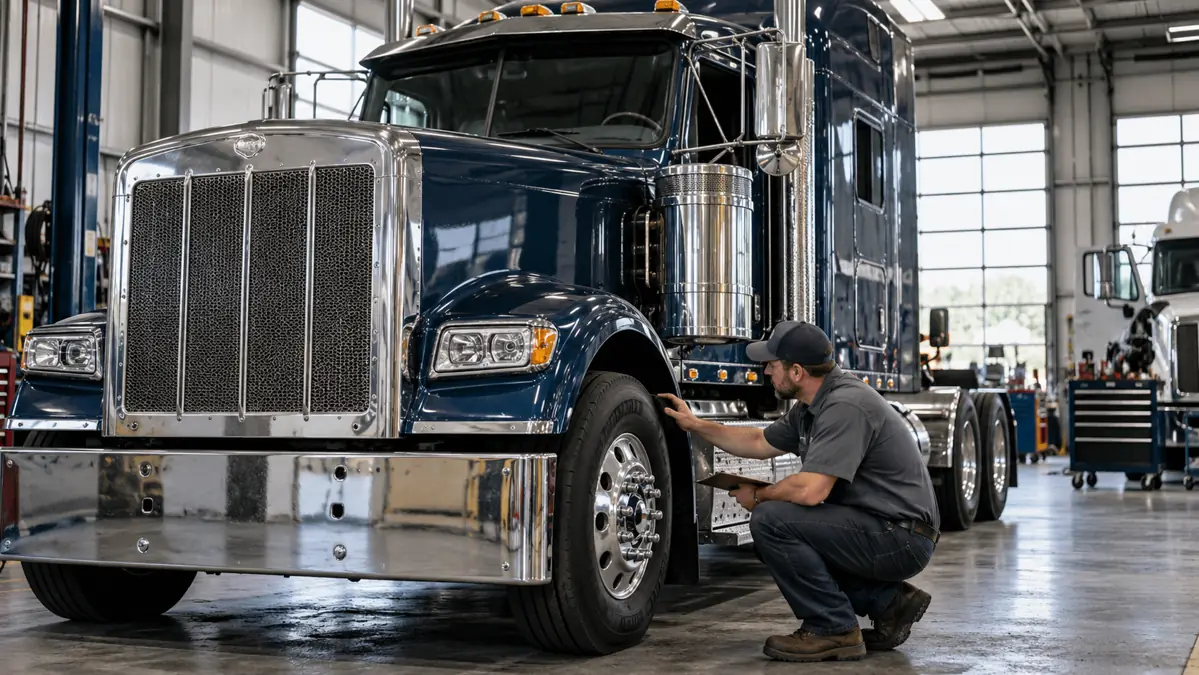
Discuss how equipment is assigned and how changes are communicated. Ask who introduces the relevant procedures and where a driver raises a concern. A website image provides visual context, while the actual role information should establish what equipment is being discussed. Lions Empire labels its stock footage and generated illustrations; they are not a promise about a specific unit or a description of every truck available for recruiting.
The equipment guide contains a detailed checklist for assignment, trailer, reporting and communication questions. Use it to prepare a focused discussion rather than trying to resolve technical issues through a recruiter call. This guide does not evaluate a vehicle's condition or provide operating advice. For a returning driver, the practical goal is to understand the current arrangement and the official route for obtaining the information needed at the next stage.
Review compensation with fresh questions
Do not assume that the compensation method in your previous role applies to the new one. Ask how the current arrangement is calculated, which work it covers and when payment is issued. If the recruiter provides an example, label it as an example rather than a prediction of your earnings. The driver pay guide explains the questions that make different offers easier to compare on the same basis.
Discuss conditions attached to any additional payment mentioned in the conversation. Ask where the current terms are documented and what remains to be confirmed. A returning driver may remember a familiar term while the calculation behind that term differs from earlier work. Clarify it directly. This article does not publish a Lions Empire pay rate, promise a bonus or estimate earnings for a particular schedule.
Keep the compensation answers attached to the role being reviewed. If recruiting discusses another opening, revisit the calculation and work included. Compare the full arrangement alongside reporting location, trip pattern and equipment. A clear compensation explanation helps you make an informed comparison, but it should not conceal an essential schedule or qualification question still pending. Use the next conversation to resolve those gaps before treating the opportunity as settled.
Prepare for a conversation without oversharing
The first inquiry should contain enough information to begin a relevant discussion. Provide the name, phone, email, location and experience requested by the form, then add a short note that you are returning to driving and want to discuss current requirements. Identify one or two priorities for the next role. Keep the message focused on the work rather than including unrelated personal history or documents not requested through that channel.
Check the contact details before submission. If the number or email is incorrect, the team may be unable to follow up. Use a channel where you can receive a reply and keep your own list of questions for the call. The website records the inquiry for the authorised team and routes it to the operations email. Submitting it starts a conversation; it does not confirm a vacancy, complete an employment application or establish that hiring requirements have been met.
If a later message requests information, confirm the official process and intended destination. The initial form is not designed for sensitive identity, medical or financial documents. You can discuss which documents are needed without placing them in an introductory message. A focused inquiry and a clear follow-up process help both sides keep the conversation relevant and make the next step reviewable.
Use a comparison sheet to identify what remains open
After each recruiting conversation, update a simple comparison record. Include the role, date, company contact, reporting location, experience requirements, trip pattern, equipment information, compensation method and next action. Leave unresolved fields clearly marked. This is especially useful when returning drivers speak with several employers and encounter terms that resemble earlier work but may have different meanings now.
Review the record for consistency. Are the schedule and equipment answers about the same opening? Has a requirement been confirmed or merely discussed? Is the next action yours, the recruiter's or another team's? A short summary helps prevent a favourable comment from being remembered as a final offer. It also gives you a useful agenda for the follow-up call: resolve the specific questions still blocking a clear understanding of the opportunity.
If a current opening does not match your circumstances, that is still a useful result. You can ask whether another role is relevant without assuming it exists. If the team needs more information, use the official process to supply it. The goal is a coherent decision record, not the greatest number of applications. Returning to truck driving is easier to discuss when your experience, current preferences and the opening's confirmed details are kept together.
Define the next step with Lions Empire
Use the driver opportunities page to begin a conversation with the Illinois team. Explain your home location, recent driving background and the work you are seeking now. If a period away from driving is relevant, include a concise timeline and ask about the current requirements for the opening. Recruiting can review the inquiry and explain the next information needed; this guide does not announce a special returning-driver programme or guarantee acceptance of any background.
The journal offers separate guides for Illinois CDL job searches, home time, equipment, pay questions and team driving. Follow the guide that addresses the decision you need to make next rather than sending the same inquiry through several forms. The contact page provides the phone and email if a direct conversation is more appropriate. Keep the role and questions clear so that the response can focus on the actual opportunity.
Before ending a call, summarise your understanding and confirm the next action. That may be reviewing an application process, waiting for a requirement clarification or discussing another opening. Record who follows up and which official channel to use. A concrete next step connects your earlier experience to a current recruiting conversation without turning a general search result or introductory guide into an employment promise.
Frequently asked questions
Does a past driving role guarantee eligibility now?
No. Recruiting must review the requirements of the current opening through its application process.
Should I upload licence scans in the first website inquiry?
No. Keep sensitive documents out of the initial form and ask which secure process to use later.
Discuss your next driving role
Share your location, experience and priorities. Recruiting can explain current openings and the next step.
Contact Lions Empire · +1 (708) 722-1817 · info@lionsempire.com
Have a question for our team?
Discuss current driver opportunities or your next freight inquiry.
Contact Lions Empire