
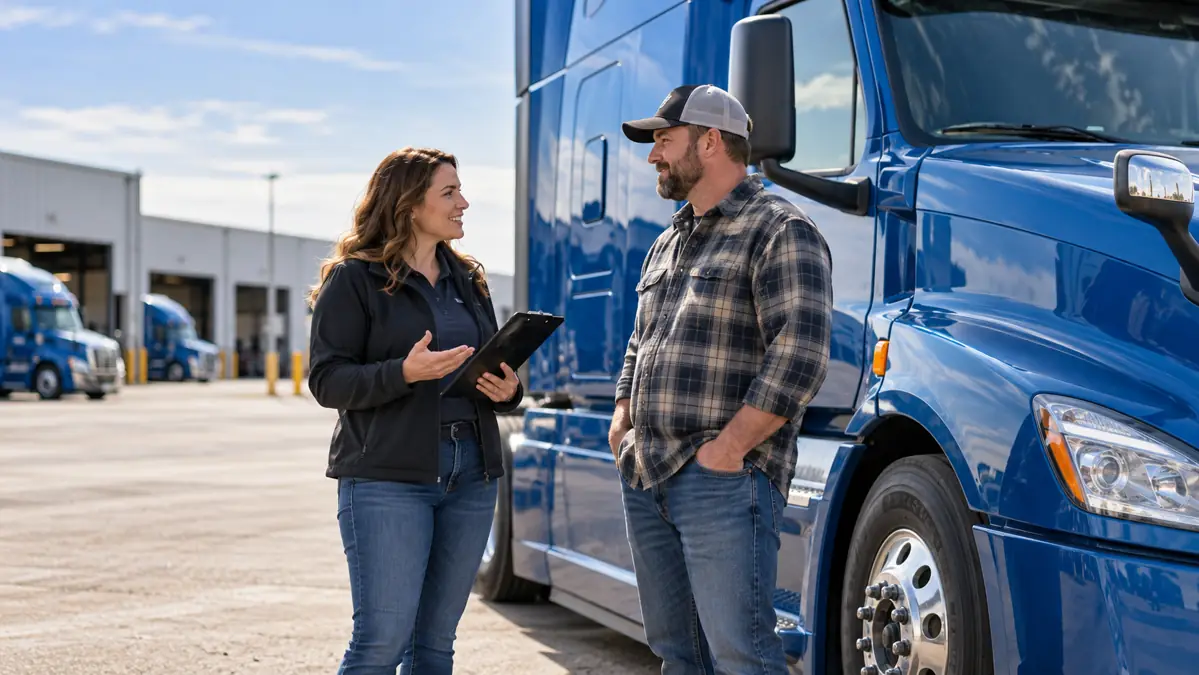
Start with the job you actually want
Searching for CDL-A truck driver jobs in Illinois produces many different arrangements. A role based near Chicago can involve local work, regional lanes or longer trips. The location in a listing does not explain the working week by itself. Before contacting a company, write down where you live, the driving experience you can document, when you can start and the schedule you would consider. These details help recruiting discuss an opening that fits your situation instead of starting with an incomplete application.
Ask about the base and the beginning of a trip
Clarify where a driver reports, where equipment is collected and how the first assignment normally begins. Ask whether parking arrangements, orientation or travel to the truck apply to the specific role. A manageable commute can become less practical if the reporting location is different from the advertised area. Keep the actual location and the expected reporting time in your notes. Lions Empire is based in Palatine, in the Chicago area; recruiting can explain the arrangements for current openings.
Compare the work, not just the headline
Ask about the typical driving area, number of stops, loading responsibilities and appointment pattern. Discuss the equipment that would be assigned and the process for reporting a maintenance concern. If a job mentions a particular freight type, ask what experience or endorsements are needed for that assignment. Do not assume that another driver’s arrangement applies to the opening you are considering. The useful comparison is the offer for your role, with its actual responsibilities and conditions.
Put pay questions in one place
When compensation is described by mileage, hours, load percentage or another method, ask which activities are included and how the amount is calculated. Discuss waiting time, extra stops, orientation, any deductions and the timing of payment. If a bonus is mentioned, request its eligibility conditions and payment schedule. A headline figure is not enough to compare two offers. Record the method and the assumptions behind it, then compare roles using the same expected working pattern.
Describe home-time priorities clearly
Explain the amount of time at home you need and the flexibility you have. Ask how requests are planned, what starts the time-off period and what happens when a trip changes. Distinguish a preferred schedule from the terms of a specific opening. Recruiting can discuss what is currently available; a general inquiry does not reserve a job or guarantee a schedule. Confirm the details again before accepting an offer or changing your current employment arrangements.
Take the next step with useful information
Use the driver inquiry form to share your name, contact details, location, CDL experience and a short description of your priorities. This starts a recruiting conversation; it is not the full employment application. Keep Social Security numbers, licence scans and medical documents out of the initial inquiry. If further documents are needed, ask recruiting which secure process to use. Prepare your questions before the call so the conversation ends with a clear understanding of the next step.
Turn a broad CDL job search into a useful shortlist
Searching for CDL A driver jobs can produce pages of results that look similar at first glance. Most mention trucks, miles, compensation and an application button. The useful differences appear when you connect an opening to your actual home location, experience and preferred working pattern. Begin by writing those three facts down. A driver living in the Chicago area and seeking a predictable return home has a different search from a driver who wants longer trips and is comfortable being away. A broad search is useful for discovering employers; a precise inquiry is more useful for finding a relevant opportunity.
Separate your shortlist into roles you can evaluate now, roles requiring clarification and roles that clearly do not match. You do not need to apply to every advertisement to learn whether it belongs on the list. Read the description, find the company's official contact details and ask the questions missing from the posting. Record the date of the answer because openings and requirements change. If the recruiter discusses a different role, start a separate entry rather than carrying the first advertisement's conditions into the new conversation.
Keep your comparison simple. For each opportunity, record home location, driving area, equipment, experience requirements, schedule, compensation method and next step. Leave an unanswered field blank instead of filling it with an assumption. That blank becomes a question for recruiting. This approach makes searches such as truck driving jobs Illinois or CDL jobs Chicago more practical: the location helps start the search, while the role details determine whether you should continue. The goal is a shortlist you understand, with clear reasons for pursuing each conversation.
Check what the Illinois or Chicago location means
A location in a job title does not always describe where your workday begins or where the truck is parked. It may refer to a recruiting area, a terminal, a customer facility or the home location an opening can support. Ask which meaning applies. If a posting says Chicago, clarify whether you report to a location in the city, a suburb or another part of the region. Then discuss the travel you personally need to reach that location and what happens when a trip ends somewhere else.
Write down the exact reporting arrangement once it is explained. Ask where orientation occurs, where equipment is collected and where it is returned for home time. Find out whether the arrangement changes with the assigned route. These are practical questions about an opening, not reasons to assume that every Illinois-based company offers local work. A carrier's registered address also does not automatically identify its operating yard or the place where a driver should arrive. Get arrival instructions directly from the team before making travel plans.
Consider an illustrative applicant who lives outside the city and can commute to one terminal but not another. Two advertisements may both appear under CDL jobs near me, yet only one reporting arrangement may work. A short call can settle the difference more quickly than an application built on an incorrect location assumption. Tell the recruiter your city and state, the distance you can reasonably travel and whether you need to return to the same location. Lions Empire is based in Palatine, Illinois; use the driver inquiry to discuss the current openings and the reporting details that apply to the opportunity being considered.
Describe your experience clearly without overselling it
Recruiting can review an inquiry more easily when the experience summary is specific and accurate. Start with the kinds of driving work you have performed, the equipment you have operated and how recently you performed that work. Distinguish a familiar task from a task you only observed or briefly encountered. If your recent role differed from the advertised opening, explain the difference directly. That gives the team a useful basis for discussing suitability and any information needed later in the formal application process.
A concise experience summary is more useful than a long list of general qualities. For example, an applicant might explain that recent work involved a particular tractor-trailer arrangement and a certain type of trip pattern, then identify the work now being sought. This is an illustrative structure, not a statement of Lions Empire's hiring requirements. The recruiter should explain the requirements for the actual opening. If you have questions about your licence class, endorsements or restrictions, use the issuing authority's guidance and the official FMCSA driver resources rather than relying on a job title to answer them.
Keep the first website inquiry limited to the basics requested by the form. There is no need to attach identity documents, licence scans, medical records or private financial information to an introductory message. Ask which documents belong in the formal application and how the company wants to receive them. If a requirement is unclear, write it down as a follow-up question. Accurate information helps both sides decide whether to continue, and it avoids the frustration of discovering that an important detail was misunderstood after travel or scheduling arrangements have already been made.
Compare the actual work behind local, regional and OTR labels
Local, regional and over-the-road labels can help organise a search, but they are not a complete description of a working week. Ask what the assigned role involves from the beginning of a trip through its end. Where do loads generally begin? What kinds of pickup and delivery appointments shape the schedule? How does the truck return to the place associated with home time? The useful answer is an explanation of the specific opening, including the parts that are predictable and the parts that can vary.
Do not make the label carry more meaning than the recruiter has confirmed. A regional opportunity may still require time away, while a locally described role may include start times or responsibilities that differ from your previous work. If a return home each day is essential, state that requirement directly rather than assuming the word local covers it. If longer trips are acceptable, describe the arrangement you can consider and ask how it is planned. The separate home-time guide provides a framework for turning those preferences into questions.
When comparing OTR truck driver jobs with regional trucking jobs, use the same questions for both. Record the expected driving area, typical trip pattern, reporting location and home-time process. Ask how an assignment can change and how the team communicates those changes. A recruiter may be able to give an example of how the role is organised, but confirm whether the example is illustrative or a current commitment. You can then compare complete arrangements rather than choosing between two labels that different employers may use in different ways.
Make compensation comparisons on the same basis
Pay is easier to compare when you understand the calculation before focusing on the headline. Ask whether the opening uses mileage, hourly, percentage-based or another compensation method. Then ask which work is covered, what records determine the calculation and when payment is issued. A figure without those details can mean different things across roles. Your aim is to understand the arrangement being offered, not to turn an advertisement into an earnings promise that the company has not made.
Request an explanation using a clearly identified example. If the role is mileage-based, ask how paid miles are established. If another structure is used, ask which amount or activity it applies to. Discuss how waiting time, additional stops, equipment issues or other duties are handled when relevant. Keep any example separate from an assurance about future earnings. An illustrative week can help explain the method, but it does not automatically predict your results or guarantee the amount you will receive.
Record the same information for each opportunity: calculation, work included, payment timing, conditions for additional payments and the written terms to review. Mark questions still awaiting confirmation. If a bonus is mentioned, ask which conditions apply and where they are documented. If you cannot compare two offers yet, identify the missing information rather than ranking them by the largest number. The driver pay questions article expands this process. Lions Empire recruiting can explain the current compensation terms for available roles; the website does not substitute a general guide for the details of a particular offer.
Ask about equipment as part of the role
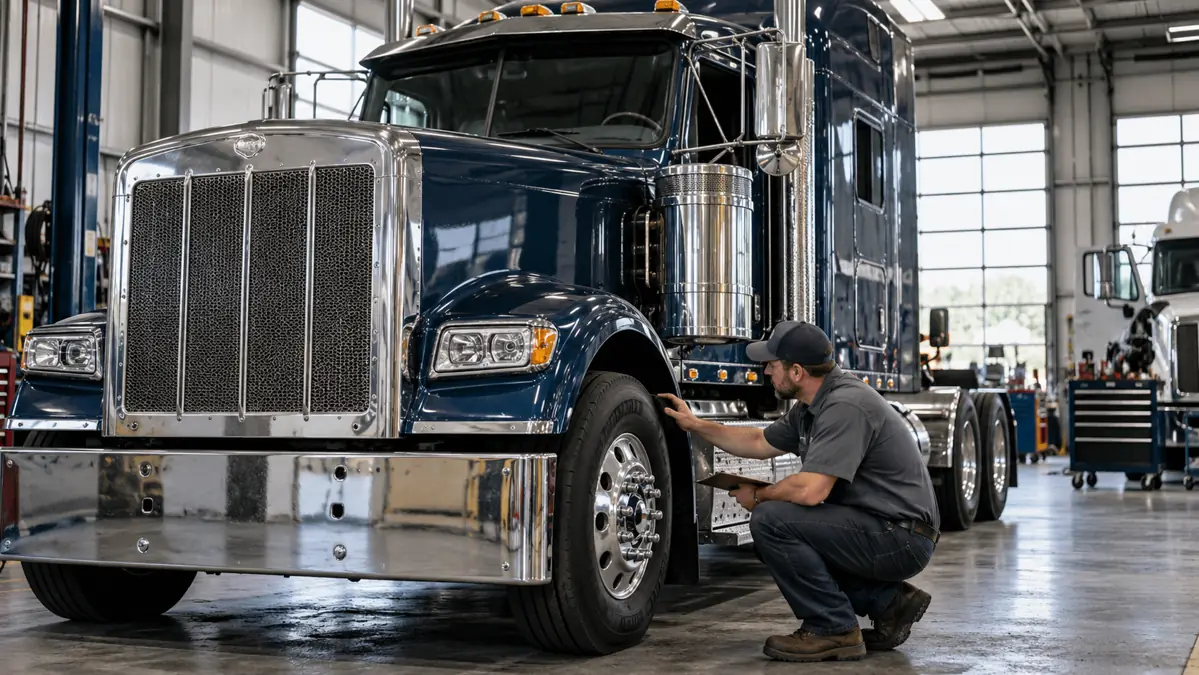
Equipment questions should connect to the driving work you are considering. Ask what tractor and trailer arrangements are associated with the current opening, how equipment is assigned and what information will be confirmed before onboarding. If a particular cab setup, transmission or feature matters to your work, bring it into the conversation early. A photograph on a website provides visual context, but it does not identify the exact unit that will be assigned to a new driver.
Discuss the practical process as well as the model. How does a driver report an equipment concern? Who explains the company's procedures at the start of the role? Where does the driver obtain the relevant operating information? These questions are useful because a working relationship depends on clear communication around the equipment, not simply on how a truck appears in an advertisement. Follow the company's procedures and applicable requirements for the actual vehicle; a recruiting conversation should not be treated as technical maintenance or safety training.
Keep equipment availability distinct from equipment preferences. You can describe what you are familiar with and what you would like to discuss without assuming that a preferred arrangement is available. Ask which points the recruiter can confirm now and which need confirmation later. If a role changes, revisit the equipment questions rather than applying an earlier answer to a different assignment. The equipment guide includes a more detailed checklist for this conversation. On this website, generated images and licensed stock media are labelled as illustrations and do not promise a particular Lions Empire truck or fleet specification.
Prepare one strong first inquiry
A useful first inquiry helps the recruiting team understand what you want to discuss. Include your name, a reliable phone number, an email address, your home location and the experience information requested by the form. Add a short note about the role you are seeking, when you may be available and the two or three questions that matter most. You do not need to write your whole career history in the message. Give enough context for a relevant follow-up and keep additional documents for the official application process.
An illustrative message might identify a Chicago-area home location, summarise recent CDL driving work and ask about the current trip pattern, equipment and compensation explanation. Another applicant might prioritise the reporting location and home-time process. These inquiries are different because the applicants' decisions depend on different details. Do not copy a general message without adjusting it to your circumstances. The quality of the information is more useful than repeatedly inserting CDL A driver jobs or similar search phrases into a form.
Check the contact details before submitting. If the phone number is mistyped or the email cannot receive replies, recruiting may be unable to continue the conversation. Use a message you are comfortable sharing with the company's authorised team and avoid sensitive documents in the initial inquiry. The driver form starts a discussion; it is not a completed employment application, job offer or confirmation that an opening is available. Keep a copy of the questions you want answered so that the follow-up call produces a defined next step.
Use the recruiter call to close information gaps
Begin the call by confirming the opening being discussed. This prevents answers about another role from being mixed into your notes. Briefly repeat your home location, recent experience and main preference, then work through the questions that remain. It is reasonable to take notes and ask for clarification when an answer is broad. A clear follow-up question is usually more helpful than silently interpreting a statement in the way you hope it was intended.
For each important point, record the answer and whether it is confirmed, approximate or awaiting another person's review. If the recruiter needs to check equipment, scheduling or another detail, ask who will follow up and how. You do not have to resolve every question in one call, but you should know which questions are still open. Before ending, summarise your understanding of the role and invite corrections. This gives both sides a chance to notice a mismatch while it is still easy to address.
Finish by agreeing on the next action. That might be reviewing a current application process, waiting for confirmation of an opening or deciding that the role does not match your requirements. Ask which official channel to use for any further information. If documents are requested later, confirm the intended destination and process directly with the company. A productive call is one that improves your understanding and leaves a concrete next step. It does not need to end with an immediate commitment, and you should not treat an introductory conversation as a final offer.
Keep a decision record and return to unanswered questions
After the call, update your comparison while the details are fresh. Identify the role, the date, the contact and the answers that matter to your decision. Keep confirmed terms distinct from examples or points still being checked. This is especially useful if you speak with several trucking companies in one week. Without a written record, it is easy to remember a favourable detail but forget which employer or opening it belonged to.
Look for practical fit across the whole opportunity. A role can sound attractive in one respect while leaving an essential question unanswered elsewhere. Decide which points are requirements for you and which are preferences you can discuss. If something essential remains unclear, ask again before making plans based on it. This is a comparison method, not a recommendation that a specific employment arrangement is right for every applicant. Your circumstances and the confirmed details of the opening should guide the next conversation.
Lions Empire's driver page connects the search to a direct inquiry with the Illinois team. The journal provides supporting checklists for home time, pay, equipment and team driving, while the contact page provides the phone, email and company information. Use those resources to prepare a focused conversation rather than sending the same question through several forms. When you are ready, share the basics and explain what matters in your next role. Recruiting can confirm current availability and describe the next step for the actual opportunity being discussed.
Work through a sample shortlist before applying
Consider a fictional driver comparing three advertisements found during a search for CDL class A truck driver jobs. The first describes an appealing compensation headline but leaves the reporting location unclear. The second identifies a driving area but provides little detail about home time. The third offers less information overall but gives a direct recruiting contact. None can yet be compared fully. The driver should use the same question set for all three rather than placing the first at the top simply because its headline sounds strongest.
For the first opportunity, ask where the role begins and how the pay calculation works. For the second, ask about the complete trip cycle and the process for confirming a requested return. For the third, begin with availability, requirements and the main features of the opening. Record each answer beside the original advertisement and mark the source date. If one recruiter discusses a different role, create a separate entry. This avoids accidentally building an ideal opportunity from conditions supplied by different companies.
The exercise ends when the driver can explain the practical arrangement of each role and identify what remains unresolved. It does not require an immediate application to every company. A focused inquiry can produce useful information without a commitment, while a formal application has its own process. Use the shortlist to decide which conversations deserve the next step and which still need clarification.
Separate broad keywords from your own inquiry
Search phrases help you find pages; they should not determine the wording of your whole message. A query such as CDL jobs Chicago tells a search engine the topic and place you are exploring. The recruiting team needs your actual home location, relevant experience and the work you want to discuss. Repeating a phrase in every sentence does not provide that information. Use ordinary language and make the practical questions easy to recognise.
You can also distinguish an informational search from a request for an opening. A guide may help you compare OTR and regional work, while a driver page provides the route to recruiting. Read the guide when a question needs preparation, then use the inquiry form to discuss current availability. This sequence connects general reading to a concrete action without treating an article as an advertisement for a role that has not been confirmed.
Keep one main inquiry for the conversation and update it when a relevant detail changes. Sending the same message repeatedly through several forms can make the history less clear. If you need to follow up, identify the earlier discussion and the question still awaiting an answer. A clear record helps recruiting respond to your next step rather than spending time reconstructing what you intended to ask.
Frequently asked questions
Does an Illinois-based trucking job mean local driving?
No. Ask recruiting about the actual driving area, reporting location and trip pattern for the specific opening.
How can I discuss a role with Lions Empire?
Start a driver inquiry or call +1 (708) 722-1817 to discuss current openings and your preferences.
Discuss your next driving role
Share your location, experience and priorities. Recruiting can explain current openings and the next step.
Contact Lions Empire · +1 (708) 722-1817 · info@lionsempire.com
Have a question for our team?
Discuss current driver opportunities or your next freight inquiry.
Contact Lions Empire